
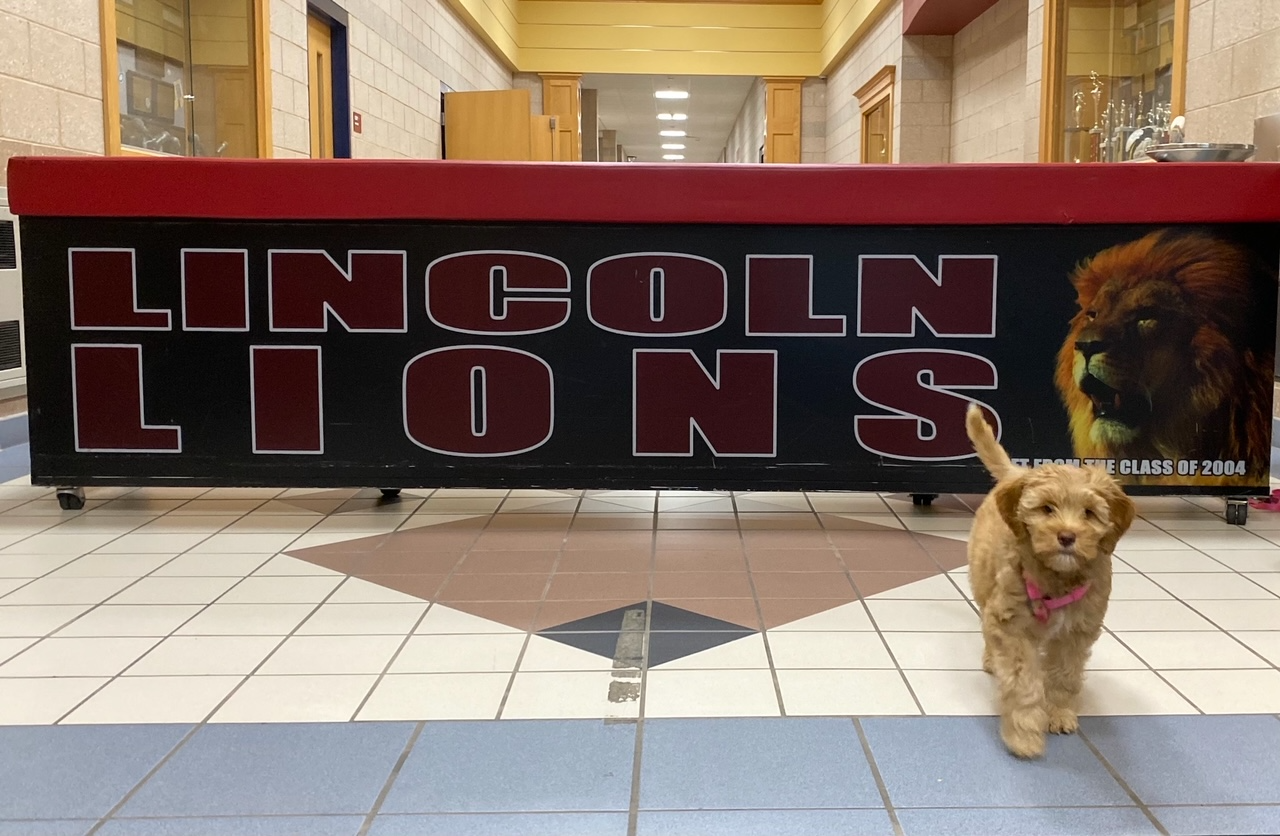
Willow
Lincoln School Department
8/25/22: The Valley Breeze, read the article here
You can follow Willow on Facebook!
WillowSupporting Student Wellness, Confidence, and Connection in Lincoln, Rhode Island
Sometimes the most powerful support for a student comes with four paws and a wagging tail.
Meet Willow, an Australian Labradoodle serving the Lincoln Public School System in Lincoln, Rhode Island. Willow is part of a teacher-led therapy dog initiative designed to bring comfort, connection, stress relief, and emotional support to students and members of the school community.
Courteous Canine is proud to have played a role in Willow's professional therapy dog training and development.
Meet Willow
Willow's journey began at Lincoln Middle School, where Resource Teacher Katie Vespia launched a therapy dog pilot program with the support of colleague Fred Hoppe and the Lincoln School Department administration.
Willow was selected in part for her temperament and her Australian Labradoodle coat. Vespia and Hoppe have served as co-handlers, participating in the training needed to develop Willow into a therapy dog prepared to work appropriately within a busy school environment.
What began as a pilot program quickly demonstrated how valuable the presence of a well-trained therapy dog can be within a school community.
A Therapy Dog With an Important Job
Willow's role extends well beyond simply being present at school.
She has become part of the Lincoln school community and has participated in a variety of school activities and situations.
Willow has served as a welcoming presence at the beginning of the school day, attended school events and parent-teacher conferences, and provided support during academically stressful situations such as exams.
She may also be requested when an individual student could benefit from additional comfort, encouragement, or assistance with emotional regulation.
Her role demonstrates an important principle of professional animal-assisted services: the dog's presence is purposeful.
A school therapy dog can help create opportunities for connection while working alongside trained handlers and school professionals.
Helping Students Through Stressful Moments
School can be an exciting place, but it can also bring significant academic, social, and emotional pressures.
For some students, sitting quietly with a therapy dog can provide a welcome opportunity to reset.
Willow's work has been particularly meaningful during testing and final exams. Lincoln Public Schools Superintendent Lawrence Filippelli has described Willow as making an incredible difference during state testing and finals.
Therapy dogs like Willow may support a school's broader efforts to create an environment where students feel safe, connected, and ready to learn.
Supporting Emotional Regulation
One of Willow's most important contributions has been supporting students who need comfort or help regulating their emotions.
The Rhode Island Healthy Schools Coalition reported that Willow became so popular that she was requested both as a student reward and to support students needing comfort or emotional regulation.
A Lincoln eighth-grade student experiencing anxiety and panic attacks described Willow's presence as bringing joy and helping students remain in the moment without judgment or expectation.
That connection illustrates something special about thoughtfully implemented school therapy dog programs.
Dogs don't ask students to explain why they are having a difficult day.
Sometimes they simply provide a calm, welcoming presence.
From Pilot Program to a Model for School-Based Therapy Dog Programs
Willow's success also demonstrates what can happen when school administrators, educators, handlers, and professional dog trainers work together.
The Rhode Island Healthy Schools Coalition reported in 2023 that the Lincoln School Department was committed to expanding its teacher-led therapy dog pilot and was working toward establishing a district policy.
Programs like Willow's require much more than bringing a friendly dog into a school.
Professional school therapy dog programs should consider:
Appropriate dog temperament and suitability
Professional training and evaluation
Handler education and competency
Student and staff safety
Canine body language and stress signals
Animal welfare and advocacy
Infection prevention and hygiene
Allergies and fear of dogs
Appropriate student-dog interactions
Consent and choice
Risk management
Policies and procedures
Ongoing training and evaluation
Successful programs protect both the people receiving services and the dog providing them.
Why Professional Training Matters
Schools are complex environments for dogs.
Hallways can suddenly fill with students. Bells ring. Chairs scrape across floors. Students may run, shout, laugh, cry, or move unpredictably. Backpacks, sports equipment, mobility devices, food, crowded classrooms, and unfamiliar objects are part of everyday school life.
A professional therapy dog must learn much more than basic obedience.
Dogs working in schools need the ability to remain comfortable and responsive around distractions while handlers must continually monitor the dog's welfare.
At Courteous Canine, our professional therapy and facility dog training emphasizes the skills of the entire handler-dog team.
Training may include calm greetings, loose-leash walking, settling for extended periods, navigating crowds, appropriate positioning for interactions, neutrality around distractions, recovery following unexpected events, and recognizing when a dog needs a break.
Just as importantly, handlers learn to recognize subtle canine communication and advocate for their dogs.
Willow's Impact on the Lincoln School Community
Willow represents what thoughtfully developed animal-assisted programs can bring to education.
Her work can be seen in many different moments:
A student taking a few quiet minutes before an important exam.
A child having a difficult day who finds comfort sitting beside a dog.
A family arriving for parent-teacher conferences and being greeted by a friendly face and wagging tail.
A student practicing emotional regulation with Willow nearby.
Or simply a school morning made a little brighter because Willow is there.
These moments may seem small individually.
Together, they help create a school culture centered on connection, compassion, and student well-being.